Swiss Apple Stem Cells & Goji Exosomes: Plant Stem Cell Science for the Scalp
How PhytoCellTec™ Malus Domestica and goji berry exosomes work together in the ELUMÉ™ Cellular Infusion ampoule — and how to use its micro-stamp safely.
ELUMÉ™ Editorial
Most hair care works from the outside in: cleanse the scalp, condition the lengths, add shine. A hair ampoule is built for a different job. It is a concentrated, intensive step — used a few times a week rather than daily — that focuses on the place where hair is actually made — the follicle, and the small population of stem cells that keeps it renewing.
The ELUMÉ™ Cellular Infusion ampoule is built around two plant technologies from the Swiss specialist Mibelle Biochemistry: PhytoCellTec™ Malus Domestica, from a rare Swiss apple, and PhytoCellTec™ Exosomes, from goji berry. One helps protect the follicle’s own stem cells; the other carries signals between scalp cells. This guide explains what each one does, why they work as a pair, and how the ampoule’s micro-stamp applicator fits into a safe weekly routine.
Why an ampoule — and not just another tonic?
A daily tonic is about consistency: a light, leave-on layer that keeps actives on the scalp every day. An ampoule is about intensity. It delivers a more concentrated formula in fewer, focused sessions, and it gives you a way to apply it precisely where you want it — along the hairline, at the crown, down the parting.
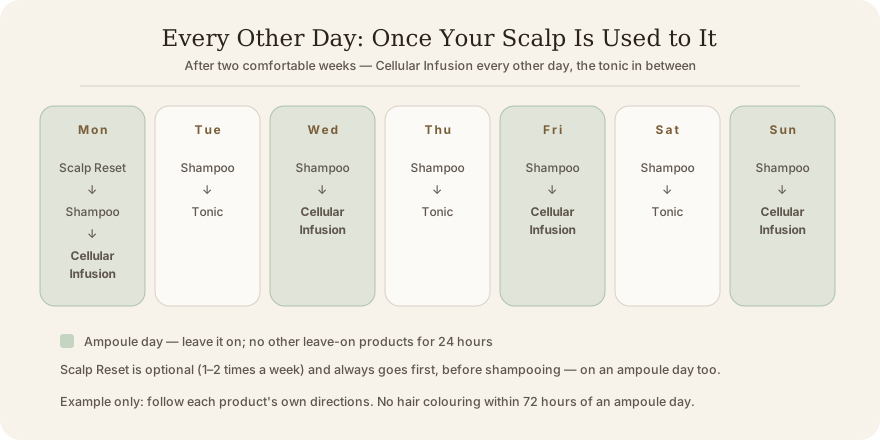
That is why Cellular Infusion is used 1–2 times a week to start with — or every other day once your scalp is used to it — rather than daily, and why, on those days, it takes the place of the tonic rather than being layered on top of it.
Hair follicle stem cells: the follicle’s renewal system
Every hair follicle cycles through growth (anagen), regression (catagen) and rest (telogen) throughout life. Each time a new growth phase begins, the follicle has to rebuild its lower part — and it relies on its own reservoir of stem cells to do it.
With age, that renewal system slows down in a recognisable pattern:
- The growth phase shortens — each cycle produces a shorter, finer hair before the follicle rests again.
- Stem cell activity declines — the follicle’s reservoir becomes less responsive to the signals that start a new cycle.
- The scalp environment changes — less signalling, more oxidative stress and low-grade inflammation around the follicle.
The result is gradual: hair that looks thinner and less dense over years, not overnight. The same stem cell story runs through hair colour too — melanocyte stem cells supply pigment to each new hair, which is why we covered them in the science of gray hair.
Healthy-looking hair over the long term depends less on the hair you can see and more on the stem cells you can’t.
PhytoCellTec™ Malus Domestica: protecting the follicle’s stem cells
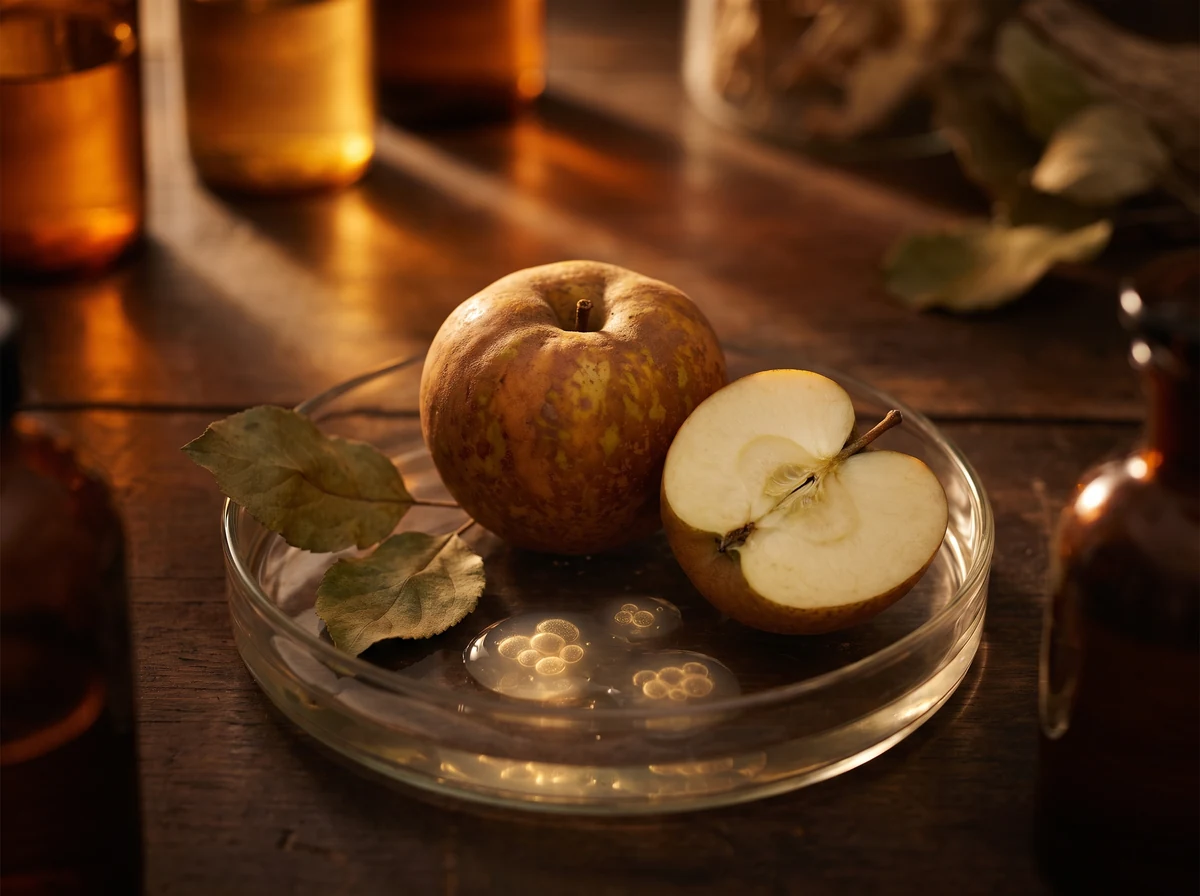
A rare Swiss apple, grown as a cell culture
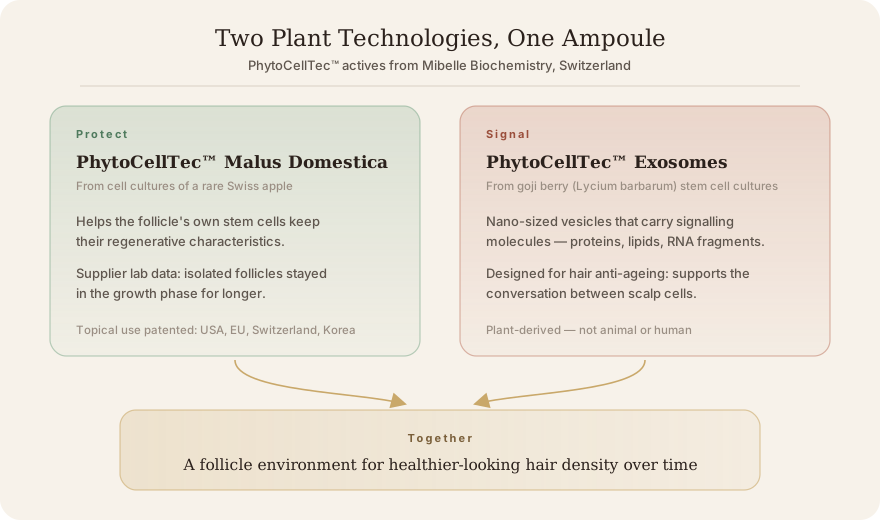
PhytoCellTec™ Malus Domestica comes from a rare old Swiss apple variety that, according to Mibelle, was prized for how long its fruit stayed fresh in storage. Rather than harvesting the fruit, the active is obtained from plant cell cultures: a small number of the apple’s own stem cells are grown in the laboratory and processed into the extract. It is a plant source — not an animal or human one.
Its topical use is patented in the USA, the EU, Switzerland and Korea.
What the supplier’s research reports
Mibelle has tested its hair-focused version of the extract on human hair cells and isolated hair follicles. According to the company:
- In the laboratory, it helped hair follicle cells — keratinocytes and dermal papilla cells — keep their stem cell characteristics.
- Isolated hair follicles treated with it stayed in the growth phase for longer, an effect Mibelle describes as delaying follicle ageing.
- In testing on volunteers, Mibelle reports less hair shedding and higher hair density.
These are the supplier’s own findings rather than independent clinical trials, and we present them that way. What they point to is a clear role: helping the follicle’s renewal system stay active for longer.
PhytoCellTec™ Exosomes: plant messengers for the scalp
Exosomes are tiny vesicles — nano-sized packages — that cells release to carry signalling molecules such as proteins, lipids and RNA fragments to neighbouring cells. They are one of the main ways cells communicate, which is why exosomes have become an active area of hair research. A 2025 systematic review of eleven clinical studies (Al Ameer et al., PMID 40955427) found consistent improvements in hair density and thickness across exosome sources — though those studies used a range of sources and methods, and plant-derived exosomes in cosmetics are a newer field.
PhytoCellTec™ Exosomes are plant-derived nano-vesicles from goji berry (Lycium barbarum) stem cell cultures, built on Mibelle Biochemistry’s patented Swiss PhytoCellTec™ plant stem cell technology and designed for hair anti-ageing. In Cellular Infusion, they bring the packaged, vesicle-borne form of cell signalling to the scalp.
Why they work as a pair
The two actives answer different halves of the same problem. Malus Domestica works on the cells that renew the follicle, helping them hold on to their regenerative character. The exosomes work on the messages around them — the signalling environment that tells the follicle when and how to grow.
Protect the renewal system, and support the conversation that drives it. Neither does the other’s job, which is why the ampoule pairs them rather than relying on either alone.
The supporting actives
Around that pair, Cellular Infusion includes three further actives already used across the ELUMÉ™ hair range:
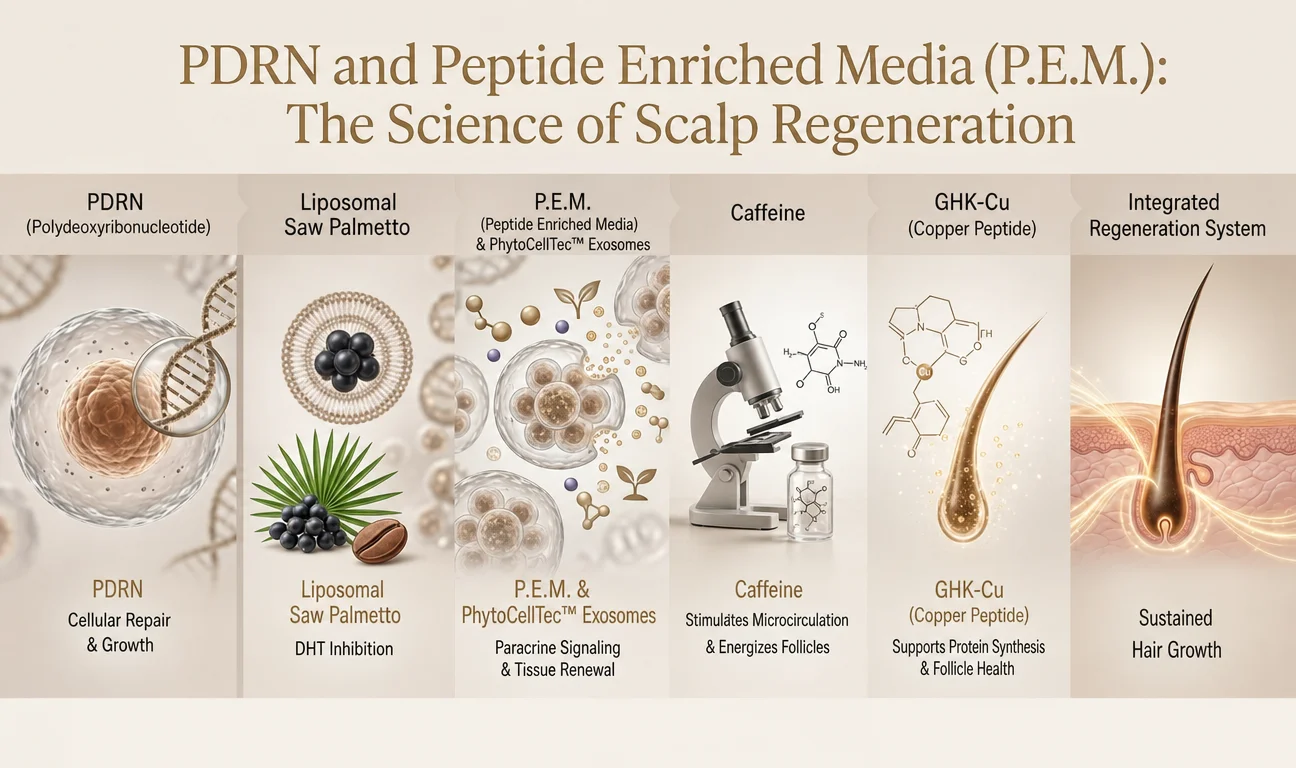
- Peptide Enriched Media (P.E.M.) — a complex of over 380 peptides, proteins and growth factors that nourishes the scalp and helps hair look denser and healthier.
- PDRN — a DNA-derived ingredient that conditions and soothes the scalp. We cover the evidence in detail in our guide to PDRN shampoo.
- GHK-Cu (Copper Peptide) — a well-studied copper peptide that conditions the skin around the hair root, with antioxidant properties for everyday scalp protection.
Why a micro-stamp applicator?
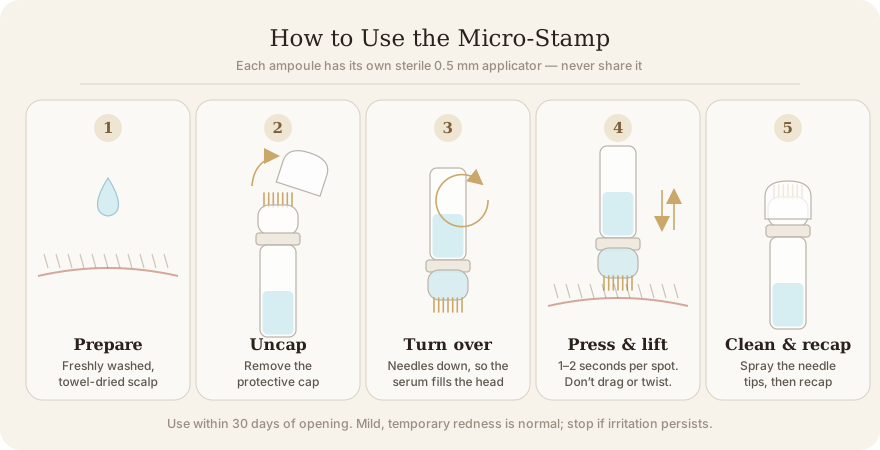
Each Cellular Infusion ampoule comes with its own sterile microneedle applicator — a small stamp with fine 0.5 mm needles on the end of the vial. Pressed gently onto the scalp, it applies the ampoule evenly and precisely, spot by spot, instead of relying on drops that run along the hair.
Microneedling itself is an established technique in dermatology clinics, where it is performed with longer needles and often combined with medical treatments. One well-known clinical study (Dhurat et al., 2013) combined weekly 1.5 mm clinic microneedling with a prescription hair-loss medicine. That is a different device, depth and product, so it doesn’t tell us what a cosmetic ampoule does — but it explains why precise, even application to the scalp has become a focus in hair care.
Cellular Infusion is a cosmetic: the stamp is there to apply the ampoule evenly across your scalp, not to treat any condition.
How to use it safely
The full step-by-step instructions are on the Cellular Infusion product page. In short:
- Clean, dry, healthy scalp. Use it after washing and towel-drying, never on cuts, irritation or sunburn.
- Press, don’t drag. Stamp each spot once, lift, and move on.
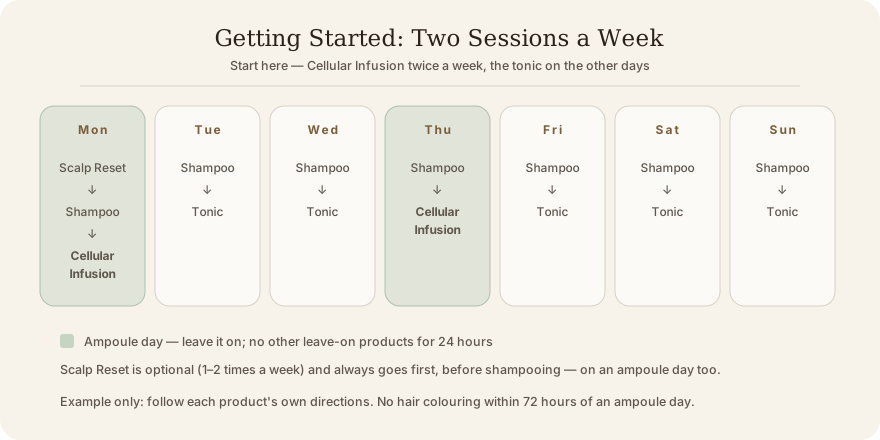
- Start with 1–2 times a week. If your scalp is comfortable after two weeks, you can increase to every other day; if redness lasts more than a day, go back to fewer sessions. Leave it on, and avoid other leave-on products, heat styling and swimming for 24 hours.
- Scalp Reset goes first. If you use it, apply it before shampooing — it can be used on an ampoule day too. Keep 72 hours between Cellular Infusion and hair colouring.
- Hygiene matters. After each session, spray the needle tips with the included Microneedle Cleansing Solution Spray, then recap. Use within 30 days of opening, and never share your ampoule.
Where it fits in your routine
Cellular Infusion is the intensive step of the ELUMÉ™ Follicle Longevity system. On ampoule days it follows the PDRN+ Scalp Activate Shampoo and takes the place of the Follicle Catalyst Hair Tonic; on the other days, the tonic carries on as usual. If you use Scalp Reset, it always goes first, before shampooing — including on an ampoule day.
Once your scalp is comfortable — usually after about two weeks — you can move to every other day:
As with all follicle care, results build gradually. Hair grows in cycles that last months, so give any new routine at least 90 days before judging it.
Cellular Infusion: frequently asked questions
Does the micro-stamp hurt?
You will feel a light prickling as the fine needles touch the scalp. Mild, temporary redness afterwards is normal; stop using it if irritation persists.
How often should I use it?
Start with 1–2 times a week. If your scalp is comfortable after two weeks, you can increase to every other day. If redness lasts more than a day, go back to fewer sessions.
Can I use it with the Follicle Catalyst tonic?
Not on the same day. On ampoule days, Cellular Infusion takes the place of the tonic and you avoid other leave-on products for 24 hours; use the tonic on the other days.
How long does one ampoule last?
Each ampoule lasts several sessions, depending on how much of your scalp you treat, and should be used within 30 days of opening. Each package contains two ampoules, each with its own sterile applicator, plus a 5 ml Microneedle Cleansing Solution Spray for the needle tips.
Is the apple extract made from apples we eat?
No. It comes from a rare old Swiss apple variety, and the active is obtained from plant cell cultures grown in the laboratory rather than from harvested fruit.
Who should check before using it?
Don’t use it on broken, irritated or sunburnt skin. If you have a scalp condition, are under a doctor’s care, or are sensitive to tea tree oil (used in the included cleansing spray), check with your doctor first.
Explore the ELUMÉ™ Cellular Infusion Hair Ampoule — PhytoCellTec™ Malus Domestica and PhytoCellTec™ Exosomes with P.E.M., PDRN and GHK-Cu, in two ampoules with their own micro-stamp applicators and a cleansing spray.
This article is for educational and informational purposes only and does not constitute medical advice. If you are experiencing significant hair loss, consult a qualified dermatologist or trichologist. ELUMÉ™ products are cosmetics, not medicines, and are not intended to diagnose, treat, cure, or prevent any disease or medical condition.