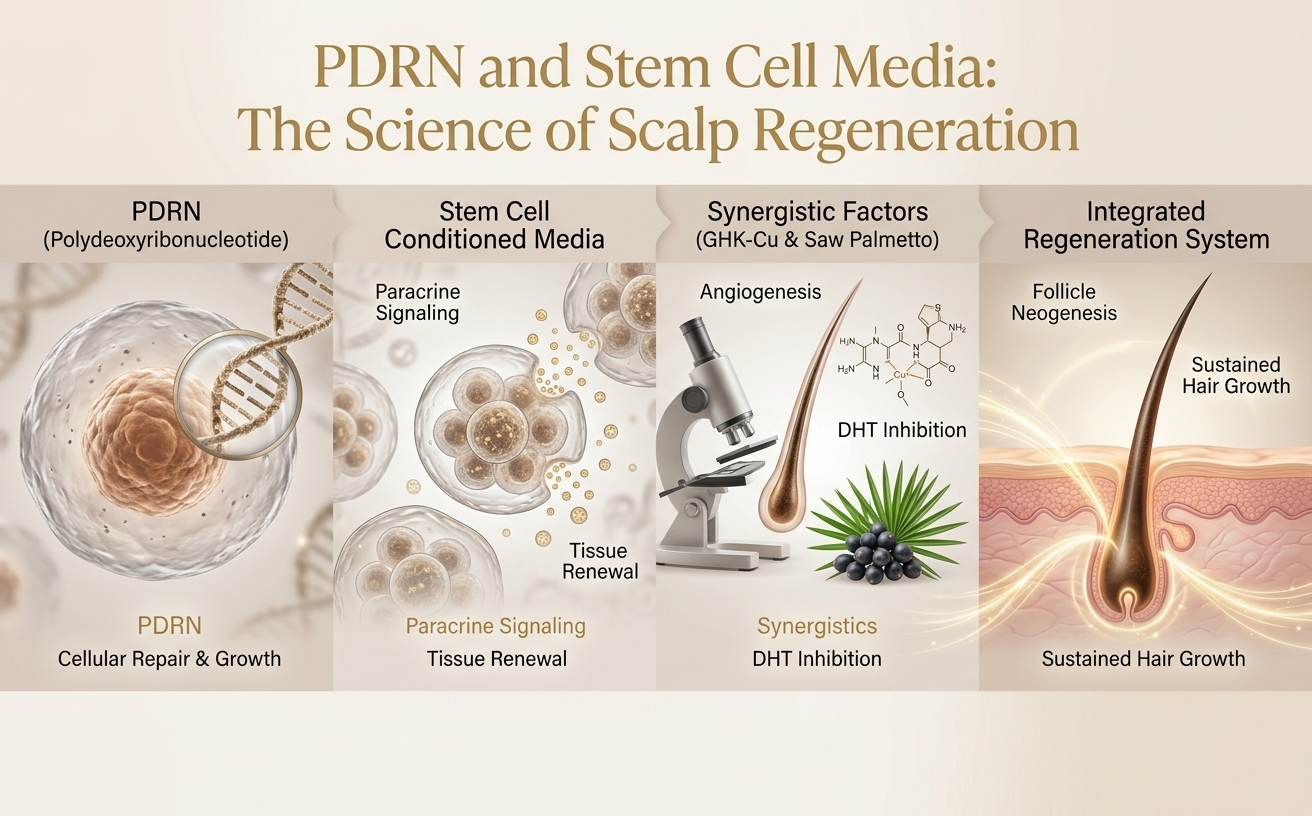
Why Hair Thinning Starts at the Scalp: The Inflammation Pathway
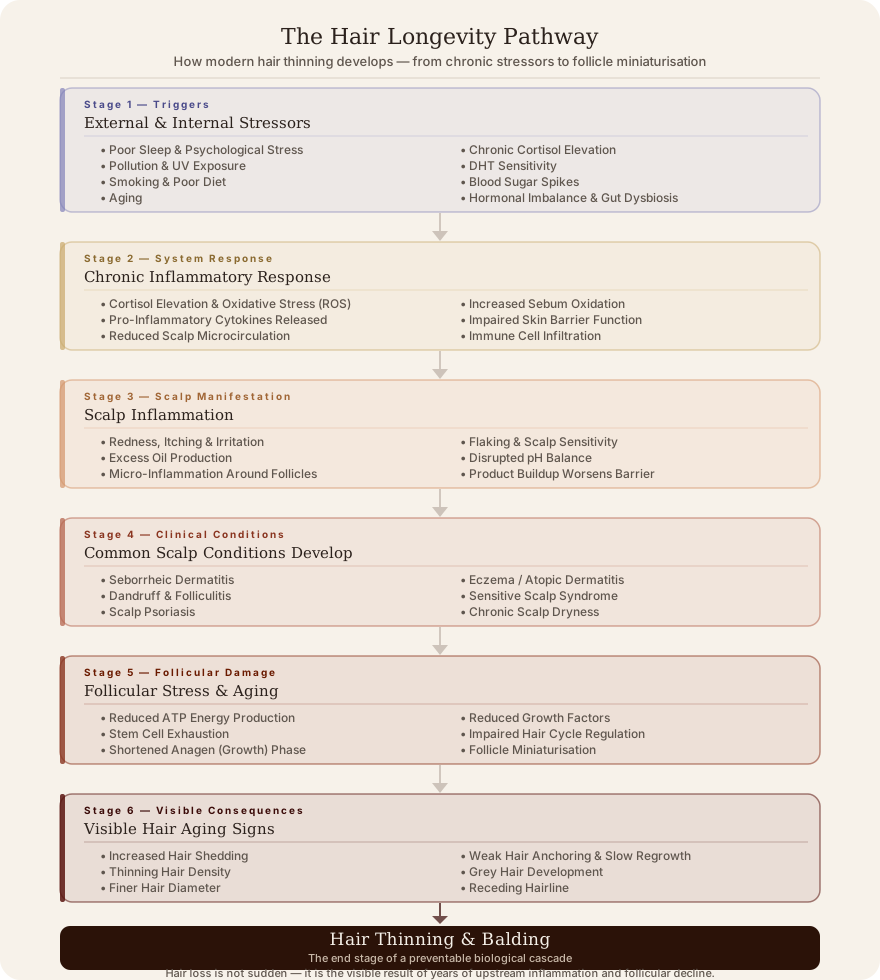
Hair thinning is not a sudden event — it is the final stage of a six-step biological cascade that begins with chronic stressors and ends with follicle miniaturisation. Understanding the pathway is the first step to intervening before the damage becomes visible.
ELUMÉ™ Editorial
Most people experience hair thinning as a surprise. One day the shower drain looks different, or the parting looks wider. But the biology tells a different story — hair loss is not sudden. It is the final visible stage of a cascade that begins years earlier, deep in the scalp's environment, driven by stressors that most people never connect to their hair.
Understanding this cascade is what separates reactive treatment from genuine hair longevity.
Hair Loss Is Not a Hair Problem
The follicle — the living unit that produces each strand of hair — is exquisitely sensitive to its surrounding environment. Blood supply, inflammation levels, hormone balance, and the availability of growth signals all determine whether the follicle stays in its active growth phase (anagen) or begins to miniaturise and eventually stop producing hair.
When that environment becomes chronically hostile, the follicle doesn't fail all at once. It slowly shrinks. Anagen shortens. Hairs emerge finer, then not at all. By the time thinning is visible, the biological damage has typically been accumulating for two to five years.
The Six Stages of Hair Decline
Stage 1 — External and Internal Stressors
The cascade begins with inputs, not with the scalp. Poor sleep, chronic psychological stress, elevated cortisol, DHT sensitivity, blood sugar instability, hormonal imbalance, pollution, UV exposure, and gut dysbiosis all create systemic biochemical conditions that the scalp — as a highly vascularised, metabolically active tissue — reflects quickly. These are not exotic risk factors. They are the conditions of modern life.
Stage 2 — Chronic Inflammatory Response
Under sustained stressor load, the body mounts a low-grade inflammatory response. Cortisol remains elevated. Reactive oxygen species (ROS) accumulate. Pro-inflammatory cytokines — particularly TNF-α and IL-6 — circulate at higher levels. Scalp microcirculation begins to decline as vascular tone changes. The skin barrier weakens. Sebum oxidises more rapidly. None of this is dramatic or obviously connected to hair — it is subclinical inflammation, often felt only as a vague scalp sensitivity or oiliness.
Stage 3 — Scalp Inflammation
The inflammatory signals reach the scalp tissue directly. The result is redness, itching, micro-inflammation around the follicle openings, excess oil production, and a disrupted skin pH. The scalp environment — which should be a precision biological system — becomes dysregulated. Product buildup compounds the problem, sealing sebum and dead cells against the follicle and worsening the barrier breakdown.
Stage 4 — Clinical Scalp Conditions
For many people, sustained scalp inflammation eventually declares itself as a diagnosable condition: seborrheic dermatitis, dandruff, folliculitis, scalp psoriasis, eczema, or chronic sensitivity syndrome. These are not the cause of hair loss — they are evidence that the upstream inflammation has been running long enough to produce clinically visible consequences. Treating the condition without addressing the upstream environment rarely resolves the hair concern.
Stage 5 — Follicular Stress and Aging
This is the critical stage — the point at which the hair follicle itself begins to fail. Chronic inflammation reduces local ATP energy production. Stem cells in the follicle bulge become exhausted. Growth factor concentrations — IGF-1, HGF, VEGF — decline. The hair cycle shortens: anagen (growth phase) contracts while telogen (resting phase) expands. Hairs emerge finer with each cycle. The follicle miniaturises.
This stage is largely invisible. The changes are molecular and histological. But it is the most important stage to address, because once follicle miniaturisation is advanced, intervention becomes progressively less effective.
Stage 6 — Visible Hair Aging Signs
Now the biological damage becomes apparent. Shedding increases. Density falls. Hair anchoring weakens — strands detach more easily during washing or brushing. Regrowth is slower and finer. Hairline recession begins. Grey hair development accelerates alongside the loss of melanocyte stem cell function in the follicle. What appears cosmetic is actually the surface expression of years of follicular decline.
Where ELUMÉ PDRN+ Scalp Activate Intervenes
The ELUMÉ PDRN+ formulation was designed not to treat hair loss as a cosmetic surface problem, but to target the specific failure points in this cascade. Each active addresses a distinct stage.
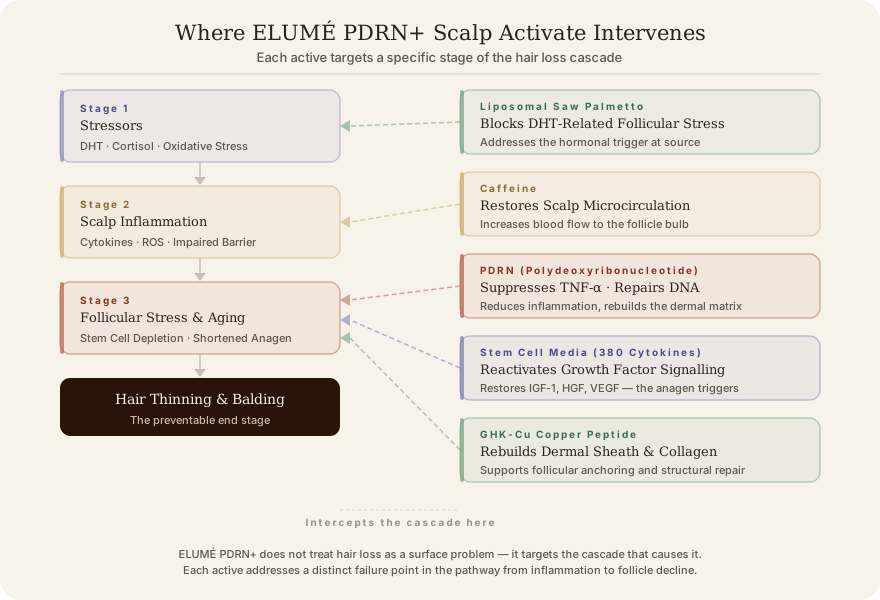
- Liposomal Saw Palmetto — Inhibits 5-alpha reductase, reducing DHT conversion at the source. Addresses the hormonal stressor before it reaches the follicle environment. Liposomal delivery improves penetration to the dermal layer where DHT activity occurs.
- Caffeine — Promotes scalp microcirculation through phosphodiesterase inhibition. Counters the reduced blood flow that characterises Stage 2, restoring nutrient and oxygen delivery to the follicle bulb.
- PDRN (Polydeoxyribonucleotide) — Acts via A2A adenosine receptor activation to suppress TNF-α, upregulate VEGF, and support collagen synthesis. Directly targets the inflammatory cytokine environment at Stage 2 and begins the repair process at Stage 3.
- Stem Cell Media (380 Cytokines and Growth Factors) — Reintroduces the growth factor signalling that chronic inflammation depletes. IGF-1, HGF, BMP-7, and GDF-15 are among the key anagen-promoting signals restored. Targets the follicular stress environment at Stage 3.
- GHK-Cu Copper Peptide — Supports dermal matrix repair, collagen and elastin synthesis, and follicular anchoring. Counteracts the structural degradation that accompanies follicular aging.
No single active resolves the full cascade. What the ELUMÉ formulation attempts is a multi-point intervention — addressing the hormonal trigger, the inflammatory environment, the vascular supply, and the follicular growth signals simultaneously.
Hair Longevity Is Prevention
The most important implication of understanding the cascade is timing. By the time hair loss is visible — Stage 6 — the upstream biology has been failing for years. A longevity approach to hair health means intervening earlier: calming chronic scalp inflammation, supporting follicular energy and growth factor supply, and maintaining the scalp environment before miniaturisation becomes irreversible.
This is why we describe ELUMÉ as a hair longevity system rather than a hair loss treatment. The goal is not to reverse advanced follicle failure. The goal is to maintain the conditions in which the follicle continues to function as it was designed to — for as long as possible.
Hair loss is not an event. It is the visible end of a biological cascade that began, silently, years before the first strand appeared in the drain.
Explore the ELUMÉ™ Follicle Longevity Shampoo — formulated with PDRN, Stem Cell Media, GHK-Cu, Liposomal Saw Palmetto, and Caffeine to intervene across the full hair loss cascade.
Explore the ELUMÉ™ Follicle Catalyst Hair Growth Tonic — a targeted leave-on treatment for daily follicle support.
This article is for educational and informational purposes only and does not constitute medical advice. If you are experiencing significant hair loss, consult a qualified dermatologist or trichologist. ELUMÉ™ products are cosmetics, not medicines, and are not intended to diagnose, treat, cure, or prevent any disease or medical condition.